An ATM skimmer gang stole more than $400,000 using skimming devices built with the help of high-tech 3D printers, federal prosecutors say.
Before I get to the gang, let me explain briefly how ATM skimmers work, and why 3D printing is a noteworthy development in this type of fraud. Many of the ATM skimmers profiled in my skimmer series are carefully hand-made and crafted to blend in with the targeted cash machine in both form and paint color. Some skimmer makers even ask customers for a photo of the targeted cash machine before beginning their work.
The skimmer components typically include a card skimmer that fits over the card acceptance slot and steals the data stored on the card’s magnetic stripe, and a pinhole camera built into a false panel that thieves can fit above or beside the PIN pad. If these components don’t match just-so, they’re more likely to be discovered and removed by customers or bank personnel, leaving the thieves without their stolen card data.
Enter the 3D printer. This fascinating technology, explained succinctly in the video below from 3D printing company i.materialise, takes two dimensional computer images and builds them into three dimensional models by laying down successive layers of powder that are heated, shaped and hardened.
3D printing in action from i.materialise on Vimeo.
Apparently, word is spreading in the cybercrime underworld that 3D printers produce flawless skimmer devices with exacting precision. Last year, i-materialise blogged about receiving client’s order for building a card skimmer. The company said it denied the request when it became clear the ordered product was a fraud device.
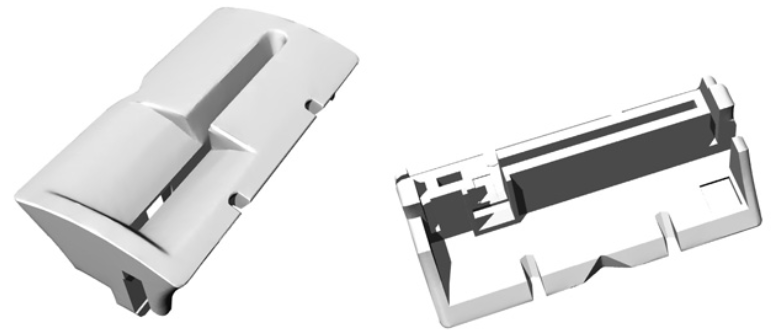
3D printer firm i.materialise received and promptly declined orders for this skimmer device - a card acceptance slot overlay
In June, a federal court
indicted four men from South Texas (PDF) who authorities say had reinvested the profits from skimming scams to purchase a 3D printer. According to statements by the
U.S. Secret Service, the gang’s leader,
Jason Lall of Houston, was sent to prison for ATM fraud in 2009. Lall was instrumental in obtaining skimming devices, and the gang soon found themselves needing to procure their own skimmers. The trouble is, skimmer kits aren’t cheap: They range from $2,000 to more than $10,000 per kit.
Secret Service agents said in court records that on May 4, 2011, their undercover informer engaged in a secretly taped discussion with the ring’s members about a strategy for obtaining new skimmers.
John Paz of Houston, one of the defendants, was allegedly the techie who built the skimming devices using a 3-D printer that the suspects purchased together. The Secret Service allege they have Paz on tape explaining the purchase of the expensive printer.
“When [Lall was] put in jail, we asked, ‘What are we going to do?’ and we had to figure it out and that’s when we came up with this unit,” Paz allegedly told the undercover officer.
The government alleges Paz also was the guy who encoded the stolen card data onto counterfeit cards. The feds say
Albert Richard of Missouri City, Texas prepared ATMs at numerous banks where the skimming devices were installed, by covering the ATM cameras or spray-painting over them, and by acting as a lookout.
A fourth defendant,
John Griffin, is alleged to have used the counterfeit cards to withdraw funds at different ATMs around Texas. Prosecutors allege the group stole more than $400,000 between Aug. 2009 and June 2011. Prior to their arrest this summer, the gang started making decent money but they split the profits between them. Federal prosecutors say the men stole $57.808.14 in month of April 2011 alone (yes, that’s an odd amount to have come out of ATMs, but I digress).
The court documents don’t say how much the men spent on the 3D printer, nor do they include pictures of the fraud devices. The Secret Service declined to offer more details, citing an ongoing investigation. But i.materialize’s
Franky De Schouwer said a high quality 3D printer can be had for between $10,000 and $20,000.
“Just looking at the idea of 3D printing a potential skimming device, a criminal could invest in buying a desktop 3D printer,” De Schouwer wrote in an email to KrebsOnSecurity. “Not a kit printer in the line of a Makerbot or a RepMan but a desktop printer of a high end manufacturer of 3D printers like Objet, 3D Systems or Stratasys (HP). You could get one of those between $10,000 – $20,000 and they will print a high quality skimming device that, including some post finishing, will look like the real thing.”
De Schouwer said his company thankfully hasn’t had any more requests to print ATM skimming devices. But that doesn’t mean the demand has gone away.
“We do notice that some people end up on our blog with the keywords ‘I want to buy an ATM skimming device,” he said.
nb : krebsonsecurity
Read More...
![[+]d'ZheNwaY's Blog[+]](http://feeds.feedburner.com/blogspot/YRtWp.1.gif)



 At the Project Synergy events, you get to meet a whole bunch of people - many of whom will become good contacts, probably even good friends - who will remind you that you aren't on your own.
 So, if you're in this part of the world, why not give some thought to a